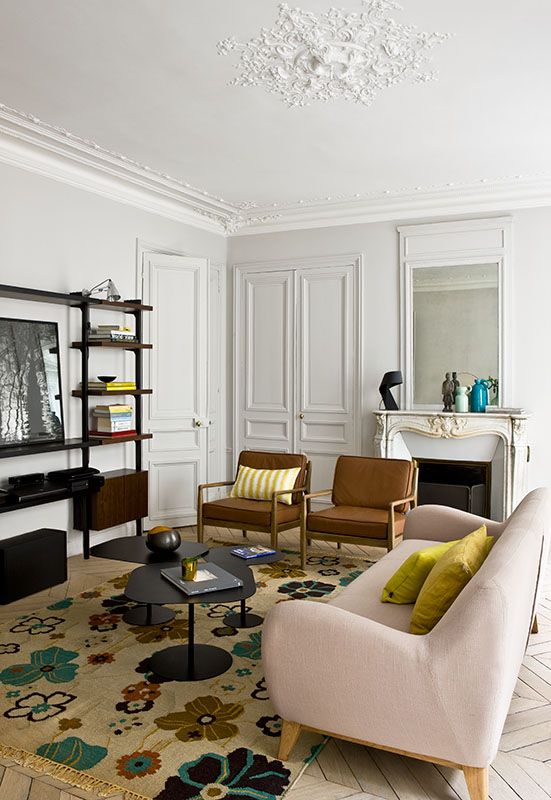
Provençal farmhouse renovation
Renovate your Provençal farmhouse in the Luberon, Alpilles, Vaucluse and Aix-en-Provence area with an architect or interior designer.
Our interior designers, architects, decorators, and landscape architects guide you through your projects for the design, renovation, restoration, and extension of historic homes (Mas Provençal , bastides, mazets, and wine estates) in Provence, particularly in the Luberon, Alpilles, and Aix-en-Provence area. Each renovation project is an opportunity to enhance architectural heritage while meeting modern standards of comfort.
Renovating a Provençal Farmhouse with an Interior Designer
-
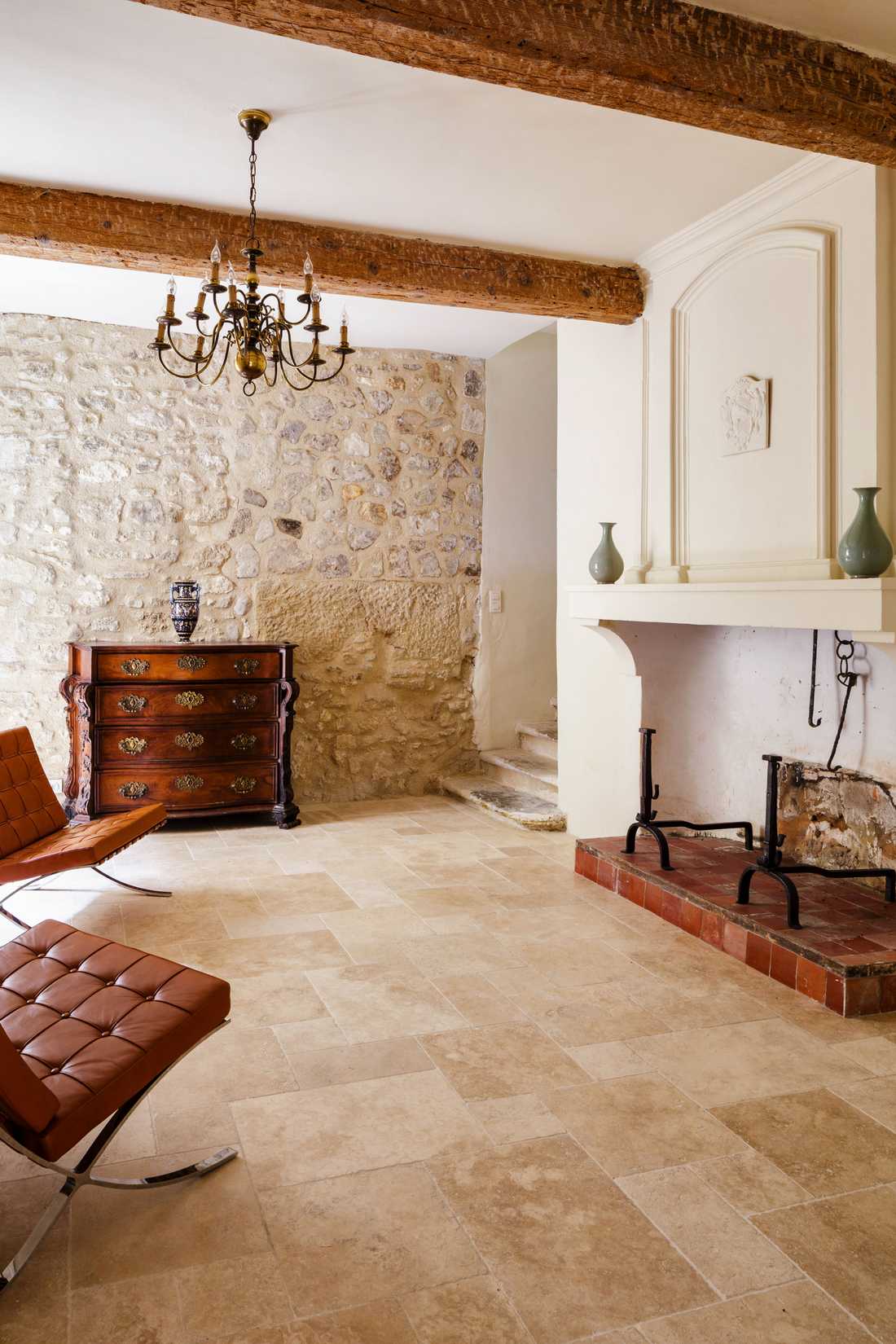
Homeowners moving into a Provençal farmhouse often wish to renovate it to improve comfort while preserving the charm and authenticity of Provençal architectural heritage. An interior designer specializing in Provençal farmhouse renovations guides them through the transformation of a stone farmhouse, a rural bastide, or a mazet.
-
An interior designer helps you combine contemporary materials with the traditional elements of a Provençal farmhouse / Mas Provençal, such as stone walls, French ceilings, terracotta tiles, antique fireplaces, or original woodwork. This approach preserves the building’s identity while providing the comfort, brightness, and functionality expected of a modern home in the Luberon and across Provence.
-
If you are considering purchasing a Provençal farmhouse, an interior designer can assist you through a pre-purchase advisory visit. During this visit, you will benefit from an independent external perspective to assess the property’s true potential, explore layout possibilities, and estimate renovation costs.
-
Provençal farmhouses are historic buildings, often built without waterproof foundations, with thick stone walls and no insulation. Renovating them requires careful attention to humidity, rising damp, ventilation, and thermal inertia. An interior designer in the Luberon will help you restore this exceptional building, improve comfort year-round, and maximize natural light through a reorganization of volumes and openings.
-
Renovating a Provençal farmhouse (Mas Provençal) also requires careful consideration of interior layout. Traditional Provençal farmhouses often have small, connected rooms, low ceilings, and limited natural light. An interior designer will help you open up spaces, create large, welcoming living areas, design an open kitchen, and independent bedrooms, while respecting the structure and character of the farmhouse.
-
With their experience, the interior designer anticipates all aspects of your Provençal farmhouse renovation project: feasibility, budget, technical constraints, local regulations (landscape and heritage guidelines of the PLU, Luberon or Alpilles Regional Natural Park charter, precautions from the Architect of the Historic Monuments). They help you visualize your future home through plans, sketches, and 3D views.
-
The certified interior designer guiding your project is your sole point of contact and holds the professional insurance required for interior renovation work.
-
An interior designer helps you obtain the most accurate quotes from general contractors (masonry, electricity, plumbing, carpentry, painting) in Provence. They connect you with trusted artisans and contractors referenced by the collective, who have the required ten-year liability and civil insurance, and are knowledgeable about traditional Provençal buildings.
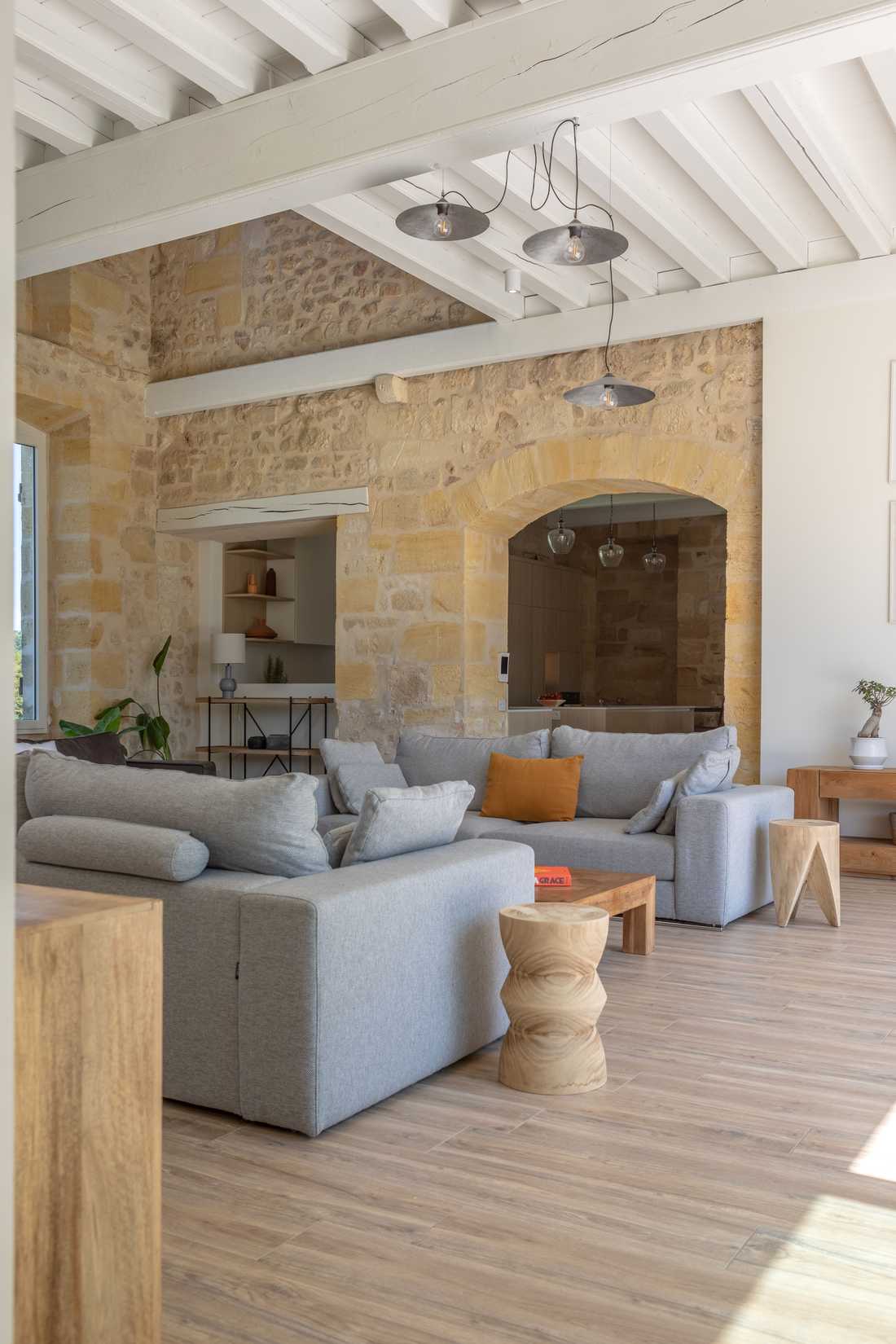
Restoring a Provençal Farmhouse with an Architect
An architect from the Créateurs d’intérieur collective can also assist you with a complete restructuring project for a Provençal farmhouse or other historic rural building in Provence: mas provençal, old farm, outbuildings, rural bastide, or wine estate.
-
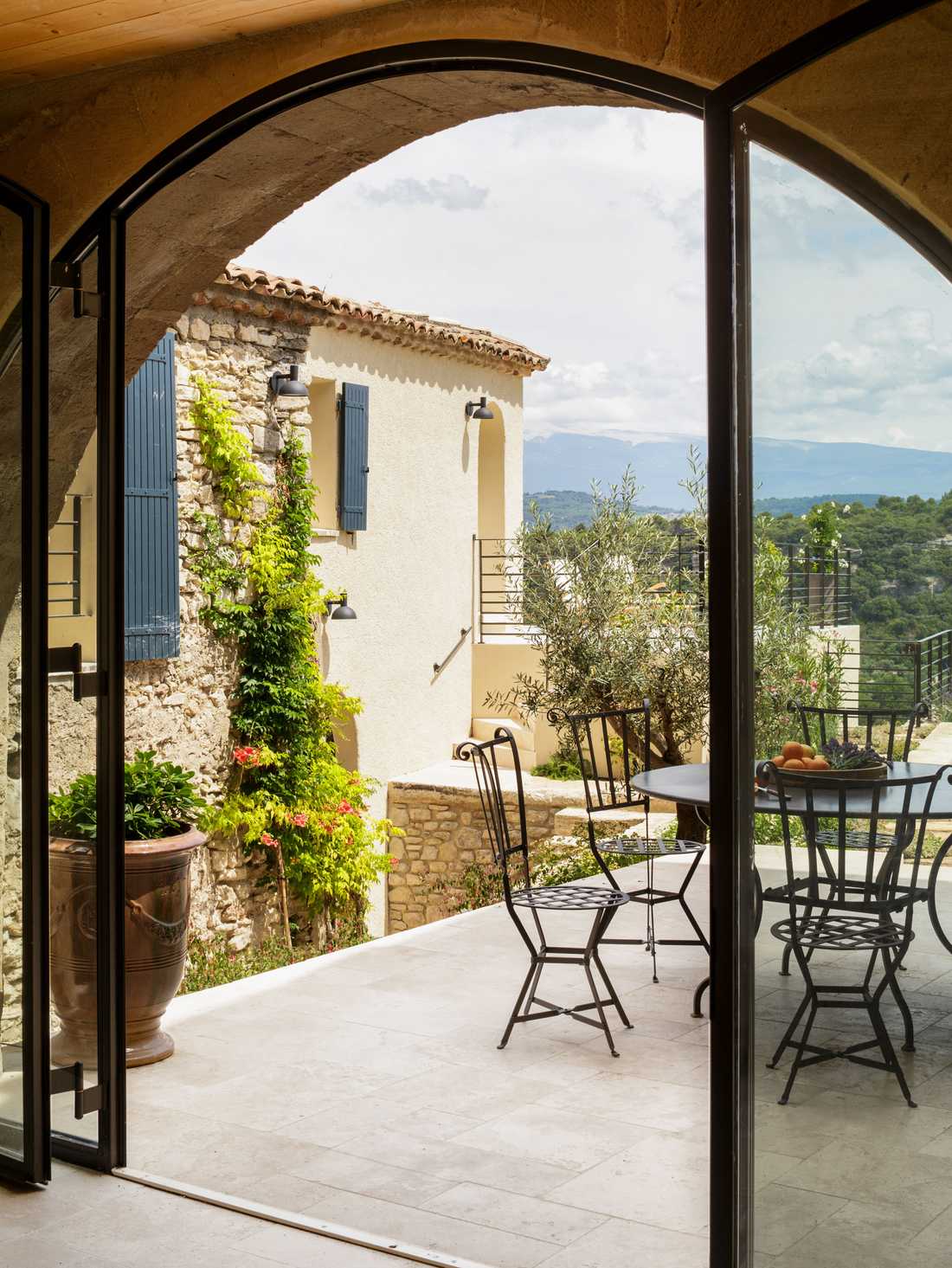
An architect specializing in Provençal farmhouse renovations offers a restoration that respects the architecture of Provençal farmhouses, highlighting existing structural elements (stone stairs, exposed beams, vaults) and typical decorative features (cornices, roof tiles, balustrades, ornate fireplaces) to create a harmonious dialogue between Provençal heritage and contemporary use.
-
The architect works on transforming spaces that were not originally intended for habitation, such as outbuildings, barns, or attics.
-
The architect can also assist with a Provençal farmhouse extension or enlargement, designing complementary volumes that respect local architectural heritage, traditional materials, and regulatory constraints, adapting the building to modern use while preserving its identity and integration into the landscape. Preserving the visual harmony of the façade (window and door proportions) is essential to maintain balance and respect the original architectural lines.
-
Their expertise allows them to validate and optimize the feasibility of your project according to regulatory and budgetary constraints: site layout, land area, building orientation, natural light management, and sunlight exposure.
-
The architect offers a comprehensive approach to your Provençal farmhouse or bastide restoration project in the Luberon, Alpilles, or Aix-en-Provence area. They compile a project study dossier (plans, diagrams, 3D views) to help you visualize your future home.
-
They identify situations requiring building permits or prior declarations and assist with administrative procedures: PLU analysis, communication with ABF and urban planning authorities, building permit applications…
-
Before construction, the architect prepares the Contractor Consultation File (DCE) detailing architectural and technical plans, along with a comprehensive work specification. They review contractors’ quotes with you and advise on each proposal according to your budget.
-
During construction, the architect supervises the execution of works. They remain on-site until project completion to verify compliance and quality of the work.
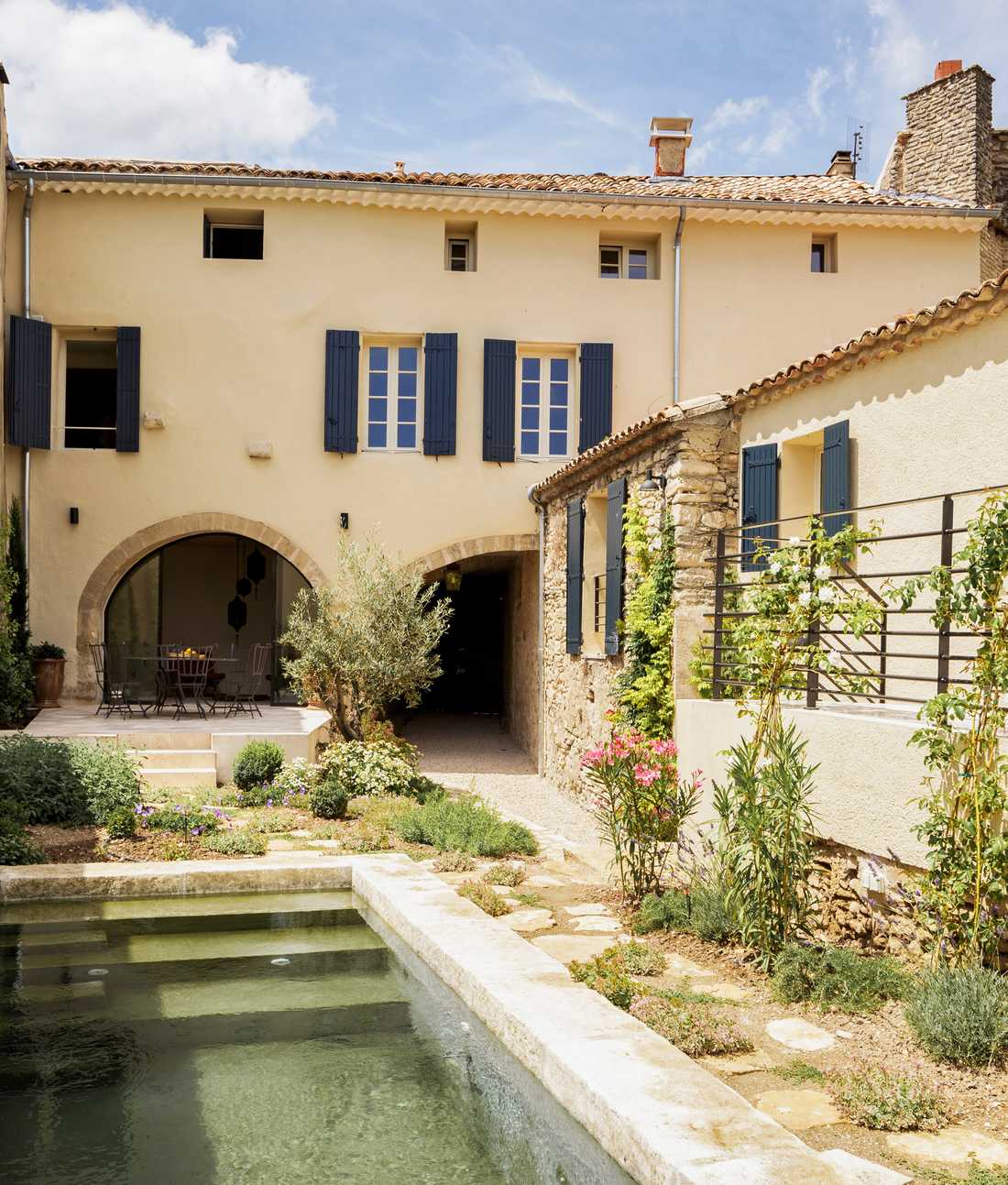
Materials to Prioritize for Renovating a Provençal Farmhouse
An architect specializing in Provençal farmhouse renovations can advise you on materials to consider for interior renovation or restoration. Material choice is not only aesthetic but ensures respect for Provençal architectural heritage and the longevity of your home.
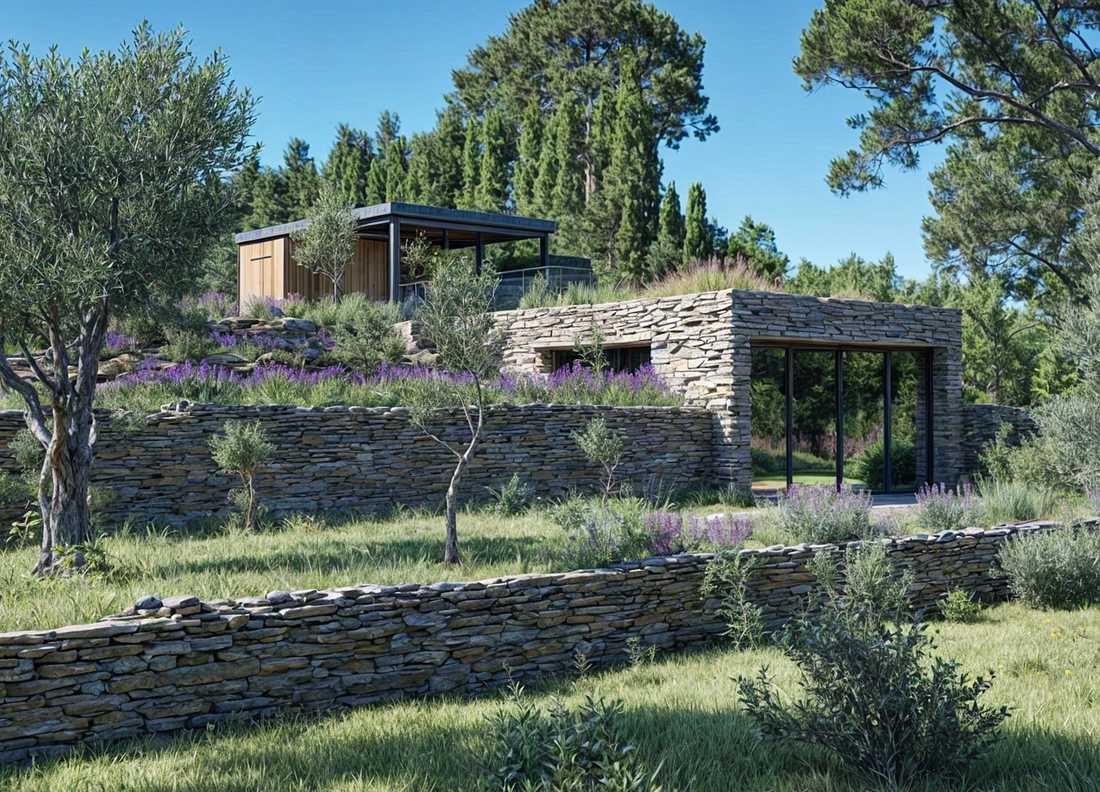
Natural Stone
Most Provençal farmhouses are built with local limestone, in shades of beige, ochre, or honey. Highly porous, this stone regulates humidity and provides significant thermal inertia. Combined with lime, it forms walls that withstand seasonal changes and age gracefully.
Lime Plaster
Cement joints or cement-based plasters should be avoided in Provençal farmhouse renovations, as cement traps moisture and prevents the stone from breathing, potentially causing deterioration, efflorescence, or mold.
Lime is not only traditional for plastering and stone joints but is particularly suitable for building and renovating Provençal farmhouses. It allows walls to breathe, naturally regulates humidity, prevents mold and fungi, and protects the stone.
Lime also adds aesthetic value, giving interiors of Provençal farmhouses a warm, authentic character thanks to its nuanced colors and mineral finish.
Flooring
Traditionally, Provençal farmhouse floors are covered with terracotta tiles. Their porous nature and vapor permeability make them ideal for managing humidity and thermal comfort in historic buildings.
Terracotta tiles create a warm and inviting atmosphere. They now come in various colors (beige, white, pink) and formats (hexagonal, square, rectangular), allowing for contemporary graphic flooring.
Other materials may also be used if they allow the building to breathe: lime concrete for a sober, mineral-modern look, large-format natural stone, or lime-based terrazzo.
Bio-based Insulation Materials
Choosing insulation materials is critical in a Provençal farmhouse renovation to preserve the building’s balance. Stone walls built with lime and without damp barriers work by inertia and natural humidity exchange. Improper insulation can cause condensation, mold, discomfort, and structural damage.
An architect specializing in Provençal farmhouses will prioritize breathable bio-based insulations, such as lime-hemp, wood fiber, cork, or cellulose. These materials are fully compatible with limestone walls and lime plaster, supporting a sustainable renovation that respects architectural heritage.
Wood
Historically used in floors, frameworks, French ceilings, woodwork, and stairs, wood is an essential element of Provençal farmhouse identity, providing structural, aesthetic, and functional roles.
The architect will favor solid wood from local or European species with natural finishes like oils or waxes. Wood is combined with stone and lime to restore structural elements or create interior carpentry (storage, stairs, integrated furniture), bringing warmth and comfort while preserving authenticity.
For exterior joinery, wood remains the preferred material, though dark aluminum can be used for a modern touch. PVC or imitation wood is discouraged.
Designing a Provençal Garden with a Landscape Architect
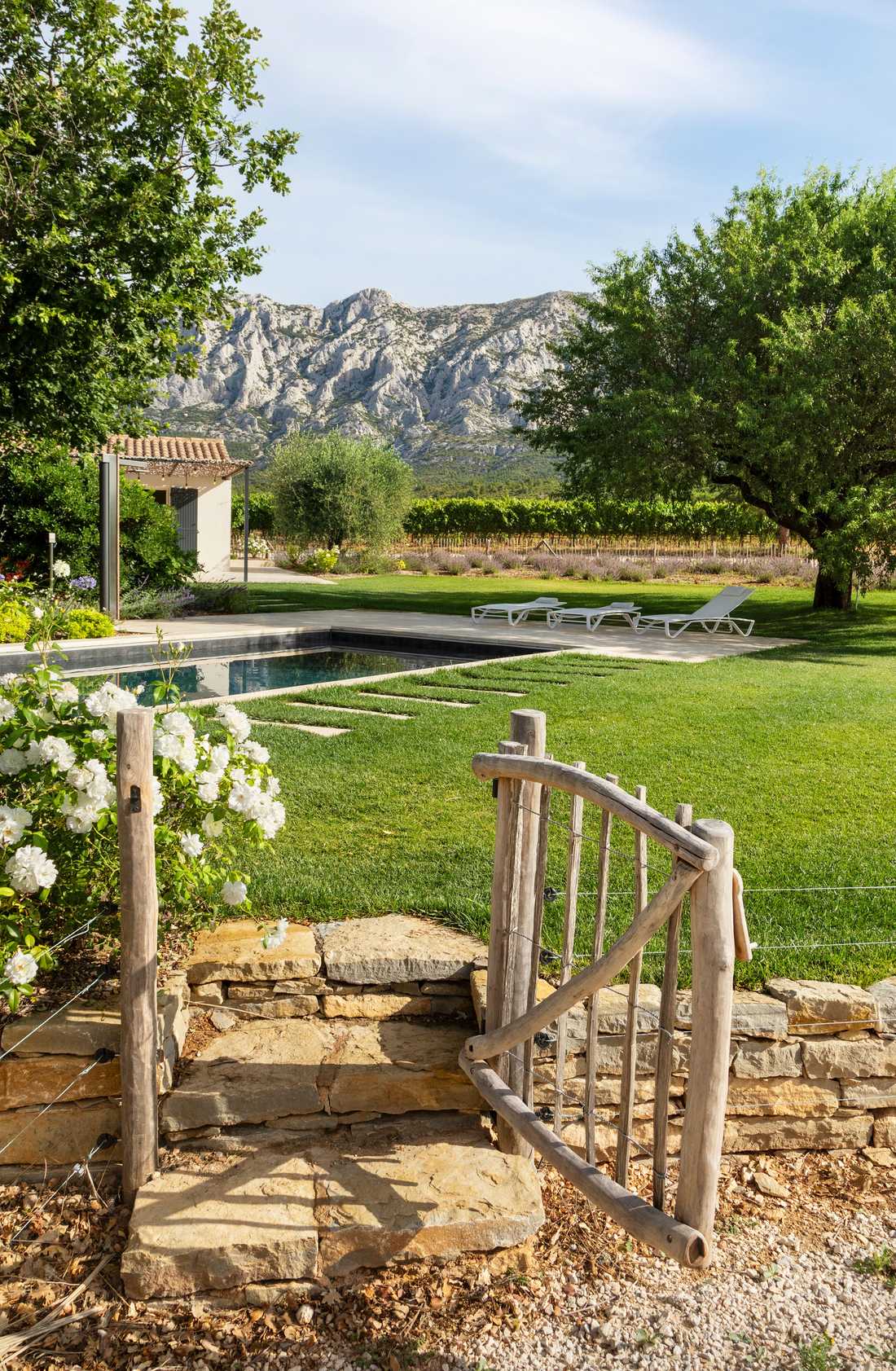
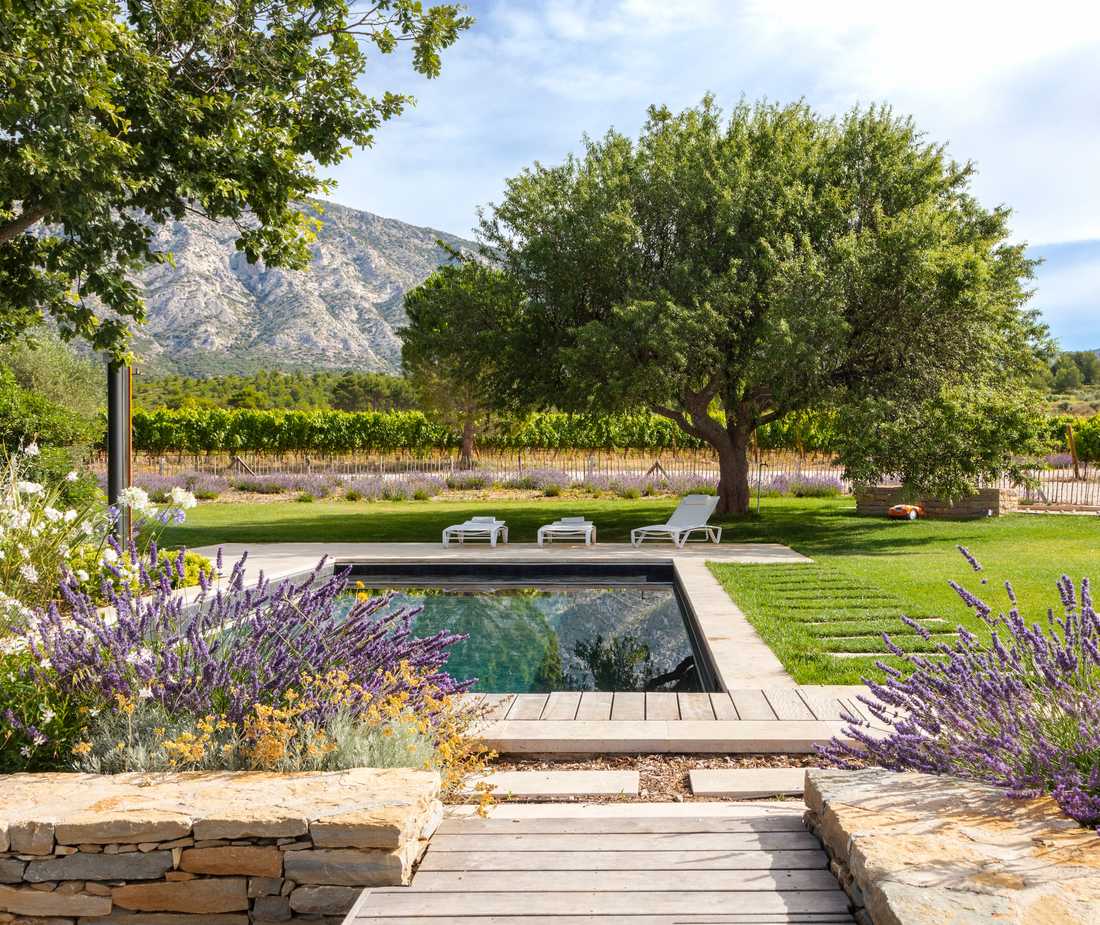
For a full renovation of a Provençal farmhouse, bastide, or wine estate in the Luberon, Alpilles, or Aix-en-Provence, a landscape architect assists in designing and creating outdoor spaces (gardens, terraces, pool surroundings, vegetable gardens) to enhance your property. Provençal farmhouse gardens are functional, extensions of the home, adapted to the Mediterranean climate and water scarcity.
- The landscape architect listens to you to create a tailor-made project that meets your needs: entertaining, relaxation, contemplation, or gardening.
- They design the Provençal farmhouse garden as an extension of living spaces, ensuring comfort and freshness through shaded terraces, pergolas, and arbors.
- They advise on plants, materials, containers, furniture, lighting, and overall garden design, and can create custom outdoor furniture (planters, ponds, fountains, garden furniture, storage) harmonizing with your home.
- The landscape architect can provide earthwork and masonry services, creating or remodeling terraces, walls, steps, or fences to ensure indoor-outdoor coherence. Designing a terraced garden is essential for slope stability, erosion control, and preserving the landscape identity.
- They design a water-efficient garden with an eco-landscaping approach, inspired by permaculture, using local resources. They favor typical Provençal plants that withstand drought (olive trees, cypresses, figs, almond trees, lavender, rosemary, thyme, laurel, irises, agapanthus).
The Provence towns where we operate:
Based in Vaucluse (84) and Aix-en-Provence, our architects, interior designers, and landscape architects work throughout Provence, particularly in the Luberon, Alpilles, Pays d’Apt, and Ventoux area.
We cover towns including Avignon, Bonnieux, Cavaillon, Coustellet, Eygalières, Fontaines-de-Vaucluse, Gordes, Goult, Joucas, Lacoste, L'Isle-sur-la-Sorgue, Les Baux-de-Provence, Lourmarin, Maubec, Ménerbes, Murs, Oppède, Pernes-les-Fontaines, Roussillon, Saint-Didier, Saint-Rémy-de-Provence, Vaison-la-Romaine, and Venasque (non-exhaustive list).
Feel free to contact us to schedule a Consultation Appointment with an architect, interior designer, or landscape architect from the Créateurs d’intérieur collective.